Learning To Fly
Class B Airspace Over Los Angeles: What Student Pilots Learn First
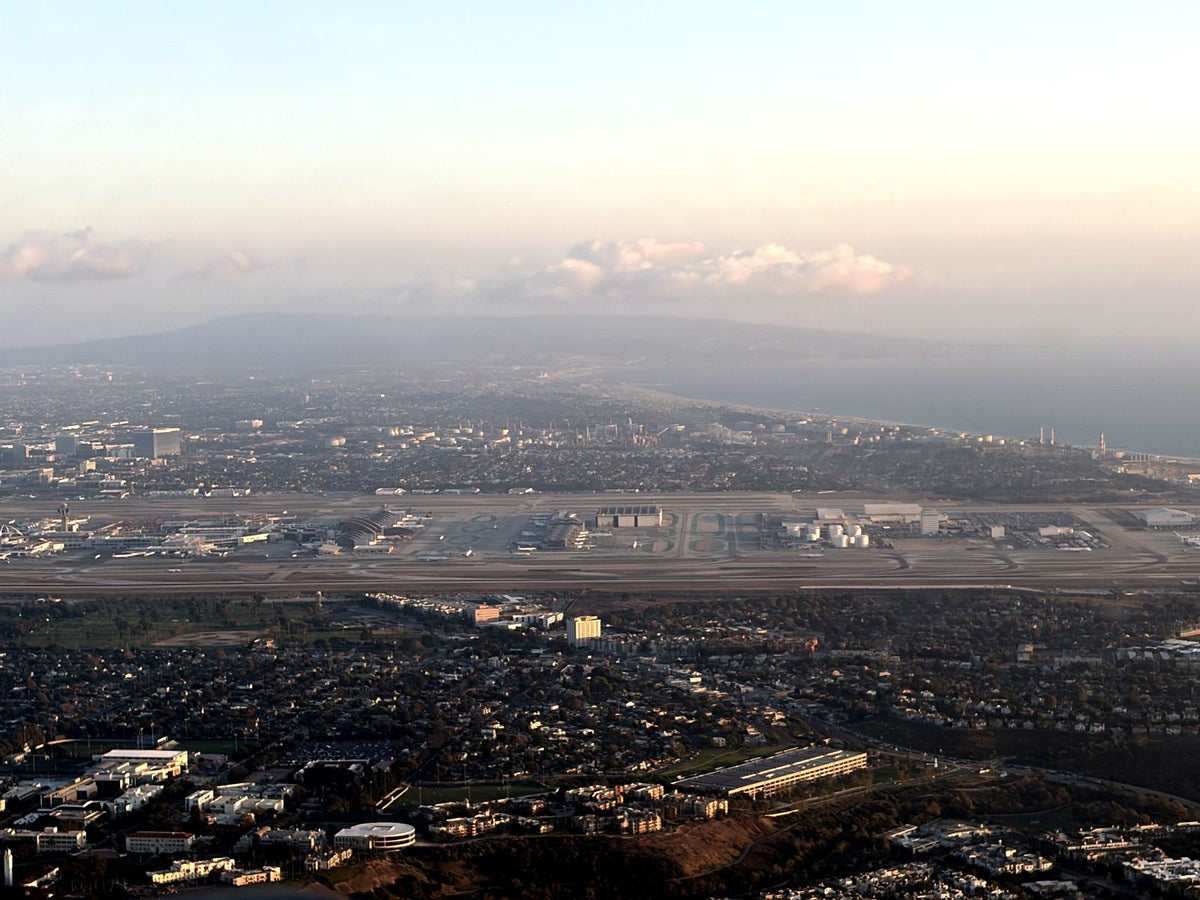
Van Nuys Airport is about 15 miles north of LAX, and the Los Angeles Class B airspace, the controlled airspace built around LAX, covers much of the basin to the south. That makes Class B one of the first things a student pilot here learns about, usually within the first few lessons, because any flight from Van Nuys toward the coast or downtown has to be planned around it. This post covers what a new student actually needs to know: the clearance rule, who may fly inside, the Special Flight Rules Area that crosses LAX, and a short quiz to check yourself.
Quick answer: Class B airspace surrounds the busiest airports, and in Los Angeles it is centered on LAX. To enter it you need an ATC clearance, a two-way radio, a transponder with altitude reporting and ADS-B Out, and either at least a private pilot certificate or a student pilot's Class B endorsement. No student may solo into or out of LAX itself. The LAX Special Flight Rules Area lets VFR pilots cross above the airport at 3,500 or 4,500 feet MSL without a clearance.
Book A Discovery Flight · $229 Book A Free Consultation Call Or Text (818) 330-1318
Why You Meet Class B In Your First Month
Class B airspace is shaped like an upside-down wedding cake: a core that reaches the ground around the primary airport, and wider shelves above it whose floors step up as you move away. Van Nuys itself is Class D airspace with its own control tower, and it sits beneath the Burbank Class C, according to the FAA's page for the airport. Much of the basin to the south lies beneath the Class B's shelves, so a flight toward the coast or downtown stays below or outside them unless you have a clearance, and that means knowing where each floor is. Reading those floors off the current chart is the first airspace skill we teach. Our Los Angeles airspace guide covers the local structure in depth, and airspace classes explained covers Class A through G.
There is a second reason it comes up early. Under 14 CFR 91.215(b)(2), every aircraft within 30 nautical miles of an airport listed in Appendix D, Section 1 of Part 91, from the surface up to 10,000 feet MSL, needs a transponder with altitude reporting. LAX is on that list, and Van Nuys is well inside that 30-mile ring, which pilots call the Mode C veil.
The Clearance Rule
14 CFR 91.131(a)(1) is short and absolute: the pilot must receive an ATC clearance from the facility with jurisdiction before operating in Class B airspace. Talking to the controller is not the same thing. Until the controller clears you into the Class B, you stay outside it.
The equipment rules sit in the same section. You need an operable two-way radio, a transponder with automatic altitude reporting, and ADS-B Out. The weather minimums are simpler than anywhere else in controlled airspace: 14 CFR 91.155 requires 3 statute miles of visibility and staying clear of clouds.
Who May Fly Inside It
Under 91.131(b), the pilot in command must hold at least a private pilot certificate, with an exception for student pilots who meet 14 CFR 61.95. For a solo flight in Class B, 61.95 requires ground and flight training from an instructor in that specific Class B area, and a logbook endorsement dated within the 90 days before the flight. In practice, that means you fly it with your instructor before you ever fly it alone.
There is a stricter rule for the very busiest airports. Appendix D, Section 4 of Part 91 lists the airports where solo student, sport and recreational pilot operations are not permitted, and Los Angeles International is on it. A student can land there only with an instructor as pilot in command, never solo.
Book A Free Consultation Call Or Text (818) 330-1318
The LAX Special Flight Rules Area
Part 93, Subpart G creates a narrow VFR route across the top of LAX, inside Area A of the Class B, at 3,500 and 4,500 feet MSL. Under 14 CFR 93.97 you do not need an ATC clearance to use it, but every other provision of 91.131 still applies, so a student still needs the Class B endorsement. The procedures in 93.95 are specific:
- VFR only, with the transponder on code 1201 before entering.
- A current Los Angeles Terminal Area Chart in the aircraft.
- Fly the Santa Monica VOR 132 degree radial.
- Southeast bound at 3,500 feet MSL, northwest bound at 4,500 feet MSL, in level flight.
- No more than 140 knots indicated, with anti-collision and position lights on.
Check Yourself
Five questions from the material above. With the site's interactive theme, this runs one question at a time with a score; otherwise each answer is printed under its question.
-
What must you have before entering Class B airspace?
- Two-way radio contact with approach
- An ATC clearance
- A filed flight plan
- A private pilot certificate and nothing else
An ATC clearance, under 14 CFR 91.131(a)(1). Radio contact alone is not enough.
-
What are the VFR weather minimums in Class B airspace?
- 3 statute miles and clear of clouds
- 3 statute miles, 500 feet below and 1,000 feet above clouds
- 1 statute mile and clear of clouds
- 5 statute miles and clear of clouds
3 statute miles of visibility and clear of clouds, under 14 CFR 91.155.
-
You cross the LAX Special Flight Rules Area heading southeast. What altitude do you fly?
- 3,500 feet MSL
- 4,500 feet MSL
- 2,500 feet MSL
- 5,500 feet MSL
3,500 feet MSL southeast bound and 4,500 feet MSL northwest bound, under 14 CFR 93.95.
-
What transponder code do you squawk in the LAX Special Flight Rules Area?
- 1200
- 1201
- 7000
- 4000
Code 1201, set before entering, under 14 CFR 93.95(b).
-
How far from LAX does the Mode C veil extend?
- 10 nautical miles
- 20 nautical miles
- 30 nautical miles
- 40 nautical miles
30 nautical miles, from the surface to 10,000 feet MSL, under 14 CFR 91.215(b)(2).
Want more practice? Our free private pilot written exam practice test has 40 questions, and the private pilot oral exam guide shows how an examiner turns airspace into scenarios.
Frequently Asked Questions
What Is Class B Airspace?
Controlled airspace around the busiest US airports, shaped like an upside-down wedding cake with shelves that rise away from the primary airport. In Los Angeles it is centered on LAX, about 15 miles south of Van Nuys.
Do I Need A Clearance To Enter Class B Airspace?
Yes. Under 14 CFR 91.131(a)(1), you must receive an ATC clearance from the facility with jurisdiction before you enter. Radio contact on its own is not a clearance.
Can A Student Pilot Fly Solo In The LAX Class B?
Only with the training and endorsement in 14 CFR 61.95: ground and flight training in that specific Class B area and a logbook endorsement dated within the previous 90 days. Solo student operations at LAX itself are not permitted.
Do I Need A Clearance For The LAX Special Flight Rules Area?
No. 14 CFR 93.97 removes the clearance requirement for the Special Flight Rules Area, provided you follow the procedures in 93.95: code 1201, the Santa Monica VOR 132 degree radial, 3,500 or 4,500 feet MSL by direction, and 140 knots or less.
Is Van Nuys Inside Class B Airspace?
No. According to the FAA, Van Nuys is Class D airspace with its own control tower, beneath the Burbank Class C. It is about 15 miles north of LAX, inside the 30-mile Mode C veil, so a transponder with altitude reporting is required.
Book A Discovery Flight · $229 Book A Free Consultation
For the airport itself, see flying out of Van Nuys Airport, and for the endorsements that come before any solo, our first solo flight guide.
Sources: FAA, Van Nuys Airport (VNY); 14 CFR 91.131, Operations in Class B airspace; 14 CFR 61.95, Student operations in Class B airspace; 14 CFR Part 91, Appendix D; 14 CFR 91.215, Transponder requirements; 14 CFR 91.155, Basic VFR weather minimums; 14 CFR Part 93, Subpart G, Los Angeles Special Flight Rules Area.
Fly It Yourself
Lesson One Is A Discovery Flight
Sixty minutes from the left seat over Los Angeles with an FAA-certificated instructor beside you, logged as dual instruction toward a license. The quickest way to see what any of this means is to fly an hour of it.
Talk to an instructor or the owner — 9 AM–9 PM, 7 days